

No two tree removals are priced the same way. A small tree in an open backyard and a large gum leaning over a power line are different jobs, even though both end with a tree on the ground.
That’s why a trustworthy quote almost always follows an on-site look rather than a phone estimate. This blog explains what drives the cost, when you need a qualified arborist, and the rules for tree removal in Western Australia.
What Determines the Cost of Tree Removal in Rockingham?
Tree removal cost in Rockingham depends mainly on the tree’s size, species, health, location and how easily crews and equipment can reach it. A straightforward removal in an open yard sits at the lower end. Risk, height and tight access push it up.
Most of the cost is labour, time and risk management, not the tree itself. The harder and more dangerous a tree is to bring down safely, the more work goes into it.
Factors That Affect Tree Removal CostsTree size and height
Yes, larger trees cost more to remove. A tall tree carries more weight, takes longer to dismantle, and often has to be taken down in sections rather than felled in one piece. Height also dictates whether crews can work from the ground or need climbing gear or an elevated work platform.
Tree species and condition
Hardwoods like eucalypts are denser and slower to cut than softer species. A tree’s health matters too, a dead, diseased or storm-damaged tree can be unpredictable and unsafe, which adds time and care.
Accessibility
Access is one of the biggest cost drivers. A tree beside a wide driveway is quick to reach; one in a fenced backyard with no side access means every branch is carried out by hand. Tight blocks and steep ground slow everything down.
Proximity to buildings, fences and power lines
A tree growing clear of everything can often be felled directly. One overhanging a roof, fence or power line has to be dismantled piece by piece and lowered with ropes. Work near power lines may also require special clearance, which adds cost.
Equipment required
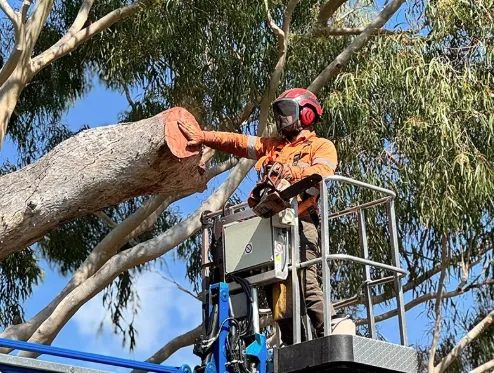
Simple jobs need hand tools and a chipper. Larger or awkward removals may call for a crane, cherry picker or stump grinder. The more specialised the equipment, the higher the price.
Waste removal and clean-up
A felled tree produces a surprising volume of timber, branches and mulch. Some quotes include full removal and clean-up; others charge separately or leave mulch on site if you want it. Always check what’s included.
Stump grinding requirements
Stump grinding is usually a separate service, not automatically part of tree removal. Removing the trunk leaves the stump and root ball in the ground. If you want the area clear for turf, paving or replanting, ask for stump grinding to be quoted alongside the removal.
Does Emergency Tree Removal Cost More?
Yes, emergency tree removal generally costs more than a scheduled job. Storm damage, a fallen tree blocking access, or a limb threatening a house needs an immediate response, often after hours and with extra crew or specialised gear.
The premium reflects urgency and safety, not opportunism. A tree resting on a roof or tangled in power lines is a hazardous, time-critical situation that emergency tree removal in Rockingham has to make safe quickly. If the danger is immediate, prioritise safety over waiting for a cheaper daytime slot.
When Do You Need a Qualified Arborist?
Any large, hazardous or difficult tree should be assessed and removed by a qualified arborist. An arborist is trained to judge tree health, structural weakness and the safest way to take a tree down without damaging property or injuring anyone.
For a small sapling in the open, an experienced operator may be enough. But for anything tall, dead, close to structures, or near power lines, a qualified arborist in Rockingham is the safer and often cheaper choice — mistakes on big trees are expensive. An arborist can also carry out a tree inspection to tell you whether removal is truly necessary or whether pruning will do.
Do You Need Council Approval to Remove a Tree in WA?
In most cases, no. The City of Rockingham’s Town Planning Scheme No. 2 does not require approval to remove trees on standard residential properties. Western Australia currently has relatively light controls on private trees compared with other states.
There are exceptions. Removing native vegetation, including individual trees, on Rural, Special Rural or Special Residential zoned land does require approval from the City. Rules can change, and some WA councils are reviewing tree-protection policies, so it’s worth a quick check with the City before removing a significant or established tree.
A tree affecting a neighbour is treated as a civil matter between owners, not a council issue.
Can Regular Tree Maintenance Reduce Future Costs?
Yes, and often significantly. Routine tree pruning keeps a canopy balanced, removes weak or dead limbs before they fall, and reduces the chance of storm damage that leads to emergency call-outs.
A well-maintained tree is safer, healthier and cheaper to manage over its life. Regular inspection also catches disease or structural problems early, when pruning can still save the tree and save you a full removal later.
How to Get an Accurate Tree Removal Quote
Insist on an on-site assessment. Photos help, but a professional needs to see access, ground conditions and what surrounds the tree to price the work properly.
When you request a quote, ask three things: is stump grinding included, is all waste removed, and is the business licensed and insured. Comparing quotes on scope rather than headline price is the surest way to avoid surprises once the chainsaws start.
The Bottom Line
Tree removal cost in Rockingham comes down to size, location, condition and how complex the job is to do safely. There’s no flat rate, which is exactly why an on-site assessment matters more than any online figure.
A qualified arborist gives you the safest and most accurate quote, while emergency tree removal exists for the situations that genuinely can’t wait. If you’ve got a tree you’re unsure about, book a professional inspection and personalised quote before anything comes down.